

Ontario Electricity Support Program: Eligibility, Credits and How to Apply
Quick answer
Check OESP eligibility, monthly Ontario electricity credits, application steps, processing times, renewal, and what to do if your bill is overdue.
- Start with the official registration or attachment pathway.
- Confirm local eligibility, catchment and current intake directly.
- Keep a dated record and use appropriate temporary care while waiting.
Published: September 7, 2026 Last updated: September 7, 2026
The OESP Bill Trace · Ontario · Updated September 2026
Start with the bill, then trace the credit backwards
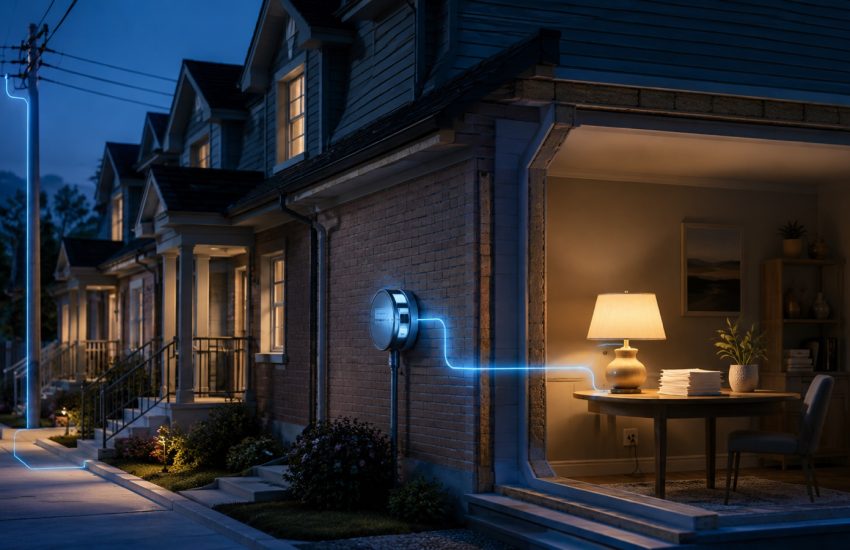
The Ontario Electricity Support Program does not send a separate benefit payment. If you qualify, it places a monthly credit on the electricity account connected to your application. The cleanest way to understand the program is to begin where the help eventually appears—and work back through every condition that must line up.
Searching for the Ontario Electricity Support Program usually means one of three things: you want to know whether your household fits the income table, how much the credit could be, or why an application has not turned into a line on the bill. Those are connected questions, but they are not the same question. This guide traces the full route from electricity account to household calculation, application, decision, bill credit and renewal.
Trace point 1: confirm that there is an eligible electricity account
OESP is for lower-income Ontario households that are responsible for an electricity account. The Ontario Energy Board says the program can cover a customer of an electricity utility and certain residents of condominiums, apartments or townhomes who have an individual meter and receive an electricity bill from a unit sub-meter provider. The key is not simply that you live in Ontario or pay rent. There must be a qualifying electricity bill tied to the home.
Put the current bill beside you before opening the application. Find the utility or unit sub-meter provider, the account number, the service address and the account holder’s name. Enter those details as the bill displays them. A familiar nickname, an old account number or a mailing address that differs from the service address can create a mismatch even when the household itself qualifies.
Changing among time-of-use, tiered or ultra-low overnight electricity pricing does not, by itself, remove OESP eligibility. Those plans affect how usage is priced; OESP is a separate affordability credit. Treat the price plan and the support application as two different decisions.
Trace point 2: place your household in the official income-and-size square
The regular OESP credit depends on two observed facts: the number of people living in the home and their combined annual household after-tax income. It is not based on one person’s take-home pay, the amount left after rent, or a rough monthly-income guess. The program uses household information and income verification, normally through the Canada Revenue Agency.
Count the people who actually form the household under the program rules, not only the people named on the electricity bill. Names and dates of birth are requested for every resident. Adults need income-verification consent and identifying information. If custody, a recent move, a separation, a temporary resident or another living arrangement makes the count unclear, use an intake agency rather than forcing the household into a square that may not fit.
| After-tax income | 1 | 2 | 3 | 4 | 5 | 6 | 7+ |
|---|---|---|---|---|---|---|---|
| $38,000 or less | $45 | $45 | $51 | $57 | $63 | $75 | $75 |
| $38,001–$54,000 | Not shown | $40 | $45 | $51 | $57 | $63 | $75 |
| $54,001–$65,000 | Not shown | Not shown | $35 | $40 | $45 | $51 | $57 |
| $65,001–$71,000 | Not shown | Not shown | Not shown | Not shown | $35 | $40 | $45 |
The blank cells matter. They mean the published regular-credit table does not show eligibility for that combination; they are not zero-dollar approvals. A four-person household with $65,000 in annual after-tax income, for example, falls in the $54,001–$65,000 row and the four-person column, which currently shows a $40 monthly credit. Always recheck the live official table before applying because thresholds and amounts can change.
A useful reframe: the program does not ask whether the electricity bill feels unaffordable. It asks whether a specific electricity account, household size and verified after-tax income intersect in an eligible square.
Trace point 3: check whether the higher credit table applies
Some eligible households receive an enhanced monthly credit rather than the regular amount. The Ontario Energy Board lists three qualifying circumstances: an Indigenous customer or a household with an Indigenous family member; electric heat as the home’s primary heating source; or use of a defined electricity-intensive medical device. Depending on household size and income, the published enhanced credits range from $52 to $113 per month.
Indigenous household
The higher table may apply when the applicant is Indigenous or lives with an Indigenous family member. Indigenous application support is also available through the program’s designated channel.
Primary electric heat
The home must use electric heating as its primary heat source. A small portable heater used occasionally is not the same fact. Answer the application’s wording accurately.
Defined high-use device
The current administration manual identifies an at-home oxygen concentrator, mechanical ventilator and kidney dialysis machine, plus any other device the OEB may specify. Do not assume every powered health device qualifies.
These circumstances change the credit calculation, not the underlying need to meet the program’s income, household and account conditions. If one applies, declare it through the official application. FADC does not need the device name, a diagnosis, a Social Insurance Number or a copy of the bill. Sensitive details belong only in the official OESP process or with a designated intake agency.
Trace point 4: send a complete application through one official route
There are three official ways to apply: online, by mail or with a designated intake agency. Online is usually the fastest route for a household whose tax information and living situation are current and straightforward. Mail is available for people who prefer paper. Intake agencies provide free help and are especially useful when income cannot be verified from a recent tax return or circumstances have changed since the last filing.
Current bill
Utility or sub-meter provider, account number, account-holder name and service address.
Household roster
Names and dates of birth for everyone living in the home, matching the requested records.
Adult identifiers
SINs or temporary tax numbers for household members aged 18 and older, supplied only to the official process.
CRA consent
Electronic or signed paper consent so income can be verified. An unfinished consent can leave the file incomplete.
If every adult has filed recently and the household facts are stable, the portal can usually send the information for CRA verification. If someone has not recently filed, has no conventional tax record, or the household’s current income differs materially from the last return, contact an intake agency. The agency may ask for proof of present household income and other documents. Call ahead for an appointment and ask exactly what to bring.
Ontario Works and Ontario Disability Support Program recipients automatically qualify according to the OEB, but they still need the benefit connected to the electricity account. The instruction is to contact the caseworker to apply. “Automatic qualification” should not be read as “the credit will appear without account information or an application route.”
Record the application or reference number and the date the completed consent was sent. Keep the confirmation in a secure place. Do not email sensitive identifiers to an address found in an ad or give them to a door-to-door visitor.
Trace point 5: diagnose the gap between application and bill credit
The OEB says applicants are generally told whether they qualify about four to six weeks after a completed application and signed consent forms are received and reviewed. If approved, the credit typically appears on the bill about six to eight weeks later; the current administration manual describes this as within one or two billing cycles after approval. These are process windows, not a guarantee that every file completes on the same day.
No decision after the normal window
Check the official portal or call the contact centre with the reference number. Ask whether the file is draft, pending, on hold, denied or awaiting consent. “Submitted” is not always the same as “complete.”
Approved, but no credit on the bill
Compare the approval notice with the current utility account. Ask whether the provider and account number match and which billing cycle should carry the first credit. A move or account replacement can break the handoff.
Income or household recently changed
Do not quietly edit the answer to fit a table. Ask OESP or an intake agency which evidence and route apply to the new circumstances.
Credit ended
Check the eligibility end date and whether renewal was completed. Most approved periods are two years; they are generally five years for someone aged 65 or older or receiving a Canada Pension Plan disability pension.
Renewal resembles a new application. The OEB has recommended starting one to two months before the current eligibility period ends so processing does not create a gap. Use the bill’s current account details, not a saved number from before a move or utility change.
Trace point 6: choose the right lane when the bill is already in crisis
OESP is ongoing monthly support. It is not the same as emergency arrears help. If the account is behind and service may be disconnected, the Low-income Energy Assistance Program has a different purpose: a one-time grant toward electricity or natural-gas arrears for qualifying lower-income customers. The OEB currently states maximums of $650 for electricity, $780 where the home is heated electrically, and $650 for natural gas, limited by the amount actually owed.
OESP lane: reduce future bills
Ongoing monthly electricity credit. Start when the household fits the income-and-size rules, even if the account is not yet in arrears. Apply through OESP.
LEAP lane: address an arrears emergency
One-time electricity or gas grant when the account is behind and disconnection is possible. Apply through a designated LEAP intake agency. The agency contacts the utility during assessment.
A household may need both lanes. Applying for OESP does not erase current arrears, and an emergency grant does not create the ongoing monthly OESP credit. If a notice has a deadline, contact the utility and the correct intake agency immediately rather than waiting for a routine OESP application to finish.
Customers receiving OESP or recent LEAP assistance may also qualify for special low-income customer-service rules. Examples include a security-deposit waiver and longer arrears-payment arrangements. Ask the electricity utility or unit sub-meter provider which protection applies to the account and what proof it needs.
Keep the support search separate from the sensitive application
The official OESP process asks for information that deserves care: SINs or temporary tax numbers, dates of birth, household details and an electricity account number. The Ontario Energy Board warns that OESP does not require a home energy assessment, audit, inspection or home visit, and the program is not affiliated with private energy-services companies. Treat door-to-door offers, pressure tactics and payment requests as warning signs.
Start from the Ontario Energy Board’s OESP page or the official Ontario Electricity Support portal. Applying is free. If you want in-person help, use the official intake-agency finder or call 1-855-831-8151. Never place a SIN, utility-account number or detailed health information into an FADC form.
One electricity credit may be only one part of the household plan
OESP answers a narrow but important question: can an eligible monthly credit be attached to this electricity account? It does not check rent help, tax benefits, food support, disability programs, emergency housing or every other utility route. FADC’s private Find Support check can organize those separate paths without asking for a SIN, banking information, government password or document upload.
Use it after recording the OESP trace point that needs attention. That way, the electricity application stays with the official program while the broader roadmap helps you see what else may be worth confirming.
The most useful outcome is not “I found a benefit.” It is “I know which account receives it, which household facts set the amount, what state the application is in, and which other lane protects me if the bill is already urgent.”
Authoritative sources
- Ontario Energy Board — Ontario Electricity Support Program
- Ontario Electricity Support Program — official application and renewal portal
- Ontario Energy Board — Low-income Energy Assistance Program
- Ontario Energy Board — bill assistance programs
- Government of Ontario — manage energy costs for your home
- Ontario Energy Board — energy scams
- FADC — reviewed Find Support program library
Program details and amounts were checked September 7, 2026. FADC provides independent public-information navigation and does not decide eligibility, process OESP applications or guarantee approval. Confirm current rules with the official program.
Official government and health-system resources
Use official sources to confirm current eligibility, hours, registration rules and clinical service availability.
- Health Canada
- Federation of Medical Regulatory Authorities of Canada
- All province and territory links
- 811, urgent care and hospital decision guide
- Health Care Connect
- Ontario Health
- College of Physicians and Surgeons of Ontario
- Health811 Ontario
Medical disclaimer: Find A Doctor Canada provides health-system navigation information, not diagnosis or personal medical advice. Call 911 for an emergency.

